§ 01 — THE SITE
Start With What the Land Is Doing
Site analysis is the first thing we do on every project. Before we talk about floor plans or materials or budgets, we go to the site and look at what’s there — views, sun, topography, Crown Land, neighbours, access roads. All of it.
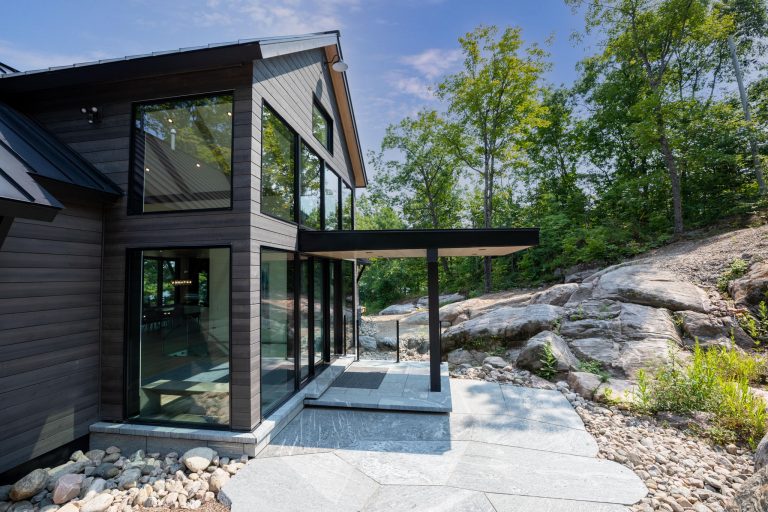
On this project, we have a Muskoka waterfront property with a clear view corridor running between two islands. That view runs at an angle off the site — so the obvious orientation isn’t necessarily the right one. Crown Land sits on one side of the property, which means no neighbours in that direction and no risk of development blocking the view there. That’s a meaningful constraint to design toward.
The existing clearing pattern from the previous owner gives us a starting point for building placement. We’ll use those cleared areas where they make sense for the design, and we won’t be bound by them where they don’t.
§ 02 — THE RULES
What the Lot Will and Won't Allow
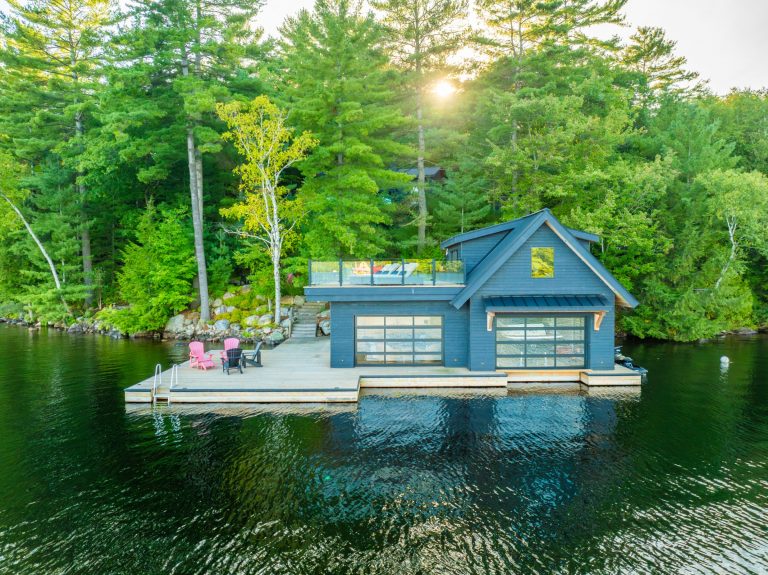
Before any concept work starts, we map out everything that constrains the building: setbacks, zoning allowances, right-of-ways, access. On this lot, the township allows a two-story boathouse with upstairs living space — that’s a permission that not every Muskoka property has.
There’s an access road running across the property with a right-of-way for the neighbour. The clients want to bring a private entrance off the main road so they don’t have to travel as far down and double back. We’ll keep the right-of-way intact and add the new access point separately.
One unusual feature: there’s a large rock sitting in the water within the building’s setback zone. Rather than treat it as an obstacle, we’re going to cover it with the boathouse footprint. The rock disappears, the setback concern resolves itself, and the boathouse gets a natural anchor point at the water.
§ 03 · THE VIDEO
Watch the Full Site Analysis
We walked through the site conditions on video — views, zoning, access road, and the early concept that ties them together. About seven minutes from site conditions to first concept sketch.
§ 04 — THE CONCEPT
Orienting the Building Toward the View
Once we have the constraints mapped, we lay the view analysis on top of the site plan and start combining them. The view corridor down the lake runs at an angle from the property — so we rotate the building to face it. That gives the main living area a direct sight line down the water, with a secondary view across to the Crown Land side.
We want that living space — kitchen, dining, main gathering room — to face the lake and capture as much of both views as possible. A bedroom pod comes off to the side, separated from the main living volume. The boathouse sits at the water’s edge, built over the rock.
The vegetation within the setback stays, but we’ll create visual pockets through it after the building is done — taking down branches selectively rather than clearing trees. That keeps the natural buffer at grade while opening the views from inside.
§ 05 — THE THROUGH-LINE
Site First, Always
The floor plan we end up with on this project will be a direct response to what the land is doing. The view corridor determines the building orientation. The rock in the water determines the boathouse position. The cleared areas influence the cottage footprint. The access situation shapes the arrival sequence.
That’s how we approach every project. The site tells you most of what you need to know, if you spend enough time asking it.
More videos to follow as this project progresses.