§ 01 — THE DEMAND
Building With Intention
Sustainable cottages and vacation homes are no longer a niche request. Buyers are increasingly aware of the environmental impact of construction and increasingly willing to invest in buildings that reduce it. A recent study by the National Association of Realtors found that 61% of home buyers were interested in sustainable features — and that number continues to grow.
What’s shifted is expectation. Sustainable features were once a premium add-on. They’re becoming the baseline. And for Muskoka properties in particular — where the land is the point — building with intention isn’t just responsible. It’s appropriate.
§ 02 — THE FOOTPRINT
Water, Energy, and the Whole System
A small ecological footprint is one of the most important design goals we set early. Every system, every material choice, every orientation decision compounds over the life of the building.
Water: rainwater harvesting collects and stores rainfall for irrigation, cleaning, and drinking — reducing reliance on municipal or well sources. Greywater systems recycle water from showers and sinks for toilets and landscaping. Low-flow fixtures and drought-tolerant landscaping complete the picture. Energy: solar power and a well-designed thermal envelope reduce the draw from the grid. Understanding your home’s energy needs and designing to meet them is one of the highest-leverage decisions made at the outset.
§ 03 — THE MATERIALS
Choosing With Intention
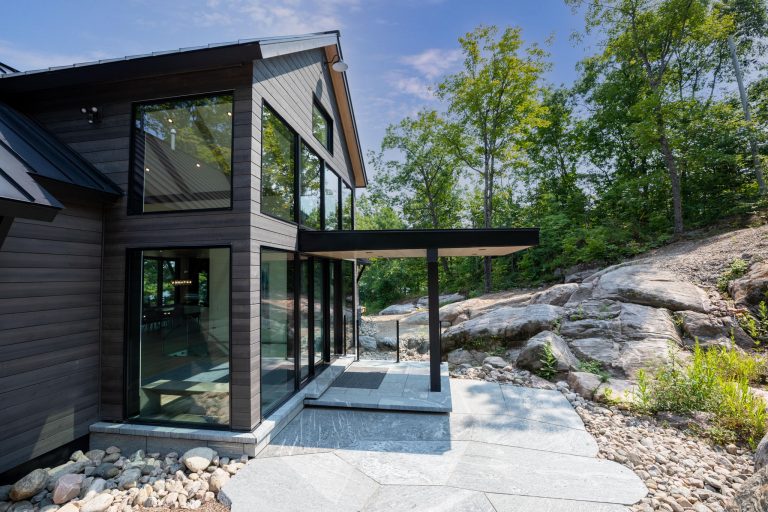
When it comes to sustainable homes, material selection is where the design values become tangible. Popular choices include wood, high-quality plywood, bamboo, rammed earth, and recycled and upcycled materials — each with its own performance profile and aesthetic character.
Rammed earth is compressed natural soil. It’s thermally massive, fire-resistant, and as honest a material as exists. Wood — certified, locally sourced where possible — sequesters carbon for the life of the building. The goal is always to choose materials that do real work: structural, thermal, aesthetic — without being finished over or covered up.
§ 04 — THE BENEFITS
For the People Inside and the Planet Outside
When built sustainably, vacation homes deliver a set of benefits that go well beyond environmental impact: improved indoor air quality, better natural lighting, and better acoustics. Our preferred envelope strategy uses Huber ZIP R Sheathing — taped at the seams, sealed around windows — followed by AeroBarrier to close remaining gaps during framing. The result breathes only through the mechanical system.
The HVAC system matters as much as the envelope. An ERV brings in clean filtered air while exhausting stale interior air. We recommend zoning — splitting living spaces from bedrooms — for meaningful comfort gains. Low-VOC paint and natural finishes complete a healthy interior package.
§ 05 — THE THROUGH-LINE
The Lake Doesn't Care About Good Intentions
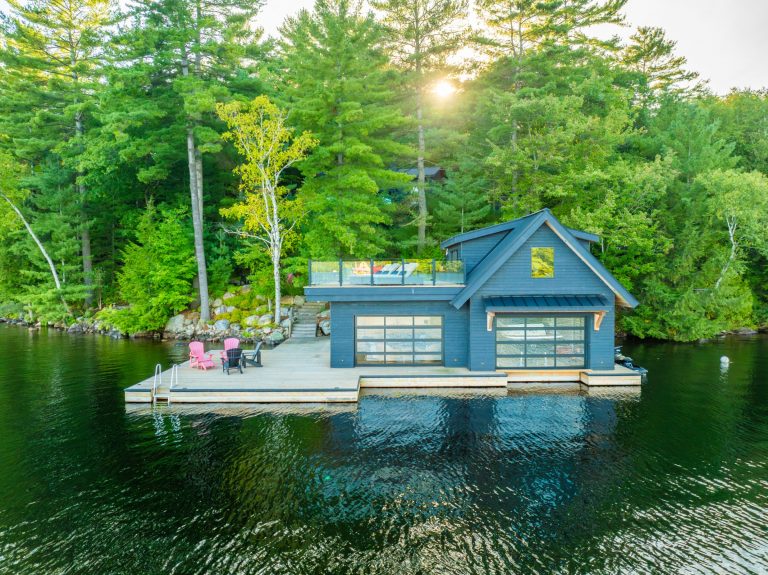
In Muskoka, sustainable design isn’t an abstract commitment. The lakes, the forests, and the shoreline ecology are the reason the property has value. Building in a way that protects that environment is the minimum requirement — not a selling feature.
Every decision we make at the design stage either adds to or subtracts from that environment. We choose to add. Not because it’s trendy. Because it’s the only approach that makes sense on a Muskoka property.